
Summary
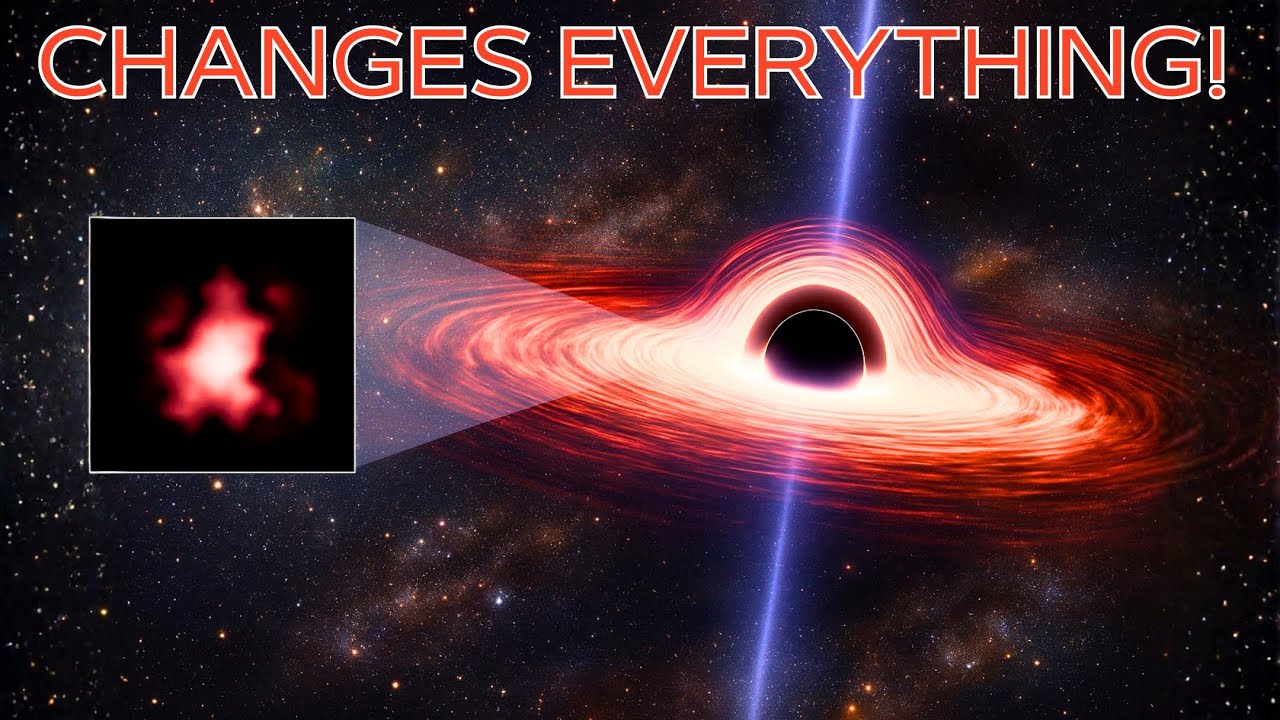
The rapid emergence of **supermassive black holes** in the early universe has long baffled astrophysicists. These cosmic giants, millions to billions of times the mass of our Sun, appear too large to have formed through conventional stellar evolution models. A new study, utilizing advanced simulations and data from the **James Webb Space Telescope**, proposes a novel explanation: a 'feeding frenzy' where even smaller, 'light seed' black holes could rapidly accrete mass. This theory challenges existing models that favored direct collapse of massive gas clouds as the primary formation mechanism for these early behemoths.
Key Takeaways
- Supermassive black holes appeared remarkably early in the universe, defying conventional growth models.
- A new study proposes a 'feeding frenzy' of rapid accretion as a mechanism for their early growth.
- This theory suggests even 'light seed' black holes could become giants through intense feeding bursts.
- The research utilizes advanced simulations and data from the James Webb Space Telescope.
- This challenges previous theories favoring direct collapse of massive gas clouds.
Balanced Perspective
The study from **Maynooth University** presents a simulation-based model that challenges the prevailing 'direct collapse' theory for early **supermassive black hole** formation. By suggesting that 'light seed' black holes can grow exponentially through intense accretion events, the research offers an alternative explanation for their observed masses in the early universe. Further observational data and independent simulations will be crucial to validate these findings and determine the relative importance of different formation pathways.
Optimistic View
This research offers a compelling new pathway for understanding the rapid growth of early **supermassive black holes**, potentially resolving a long-standing cosmic puzzle. The 'feeding frenzy' model, driven by rapid accretion onto 'light seeds,' suggests a more dynamic and efficient process for black hole formation, painting an exciting picture of the universe's formative years. This could lead to a revised understanding of galaxy evolution and the interplay between black holes and their host galaxies.
Critical View
While the 'feeding frenzy' model offers a potential solution, it raises new questions about the conditions necessary for such rapid accretion to occur in the early universe. If 'light seeds' are the primary progenitors, it implies a specific, perhaps rare, environment conducive to intense gas supply. Critics may argue that this model still requires significant fine-tuning to match all observed data and could overlook other contributing factors to early black hole growth, such as mergers.
Source
Originally reported by The Indian Express